
I was alone in my apartment in Chicago when a mentor asked me a few simple questions.
What are you good at?
What gives you energy, and what drains it?
Who do you want to become?
Who do you want to help?
What is your purpose?
Let’s just say I did not have good answers and I was shocked that I hadn’t thought of these things before.
At the time, I was working in private equity. Growing up with a single mom from humble beginnings, it was the kind of job I had spent years chasing. I had worked hard since I was 14, believing that if I kept grinding, made enough money, and landed a respected job, everything else would eventually fall into place.
Then I got there.
I spent my days building financial models, following a strict chain of command, and learning how to operate within a hierarchy. None of it resonated with me. I was disconnected from the work, failing at a long-distance relationship, and feeling purposeless for the first time in my life. The cherry on top was that I wasn’t that good at it, and for the first time I had no desire to want to get better at it.
This lack of desire and drive really scared me. After all, it’s what had got me there.
Until then, I had always known how to work hard. I knew how to put my head down, do what was expected, and let off steam afterward. What I did not know was whether all that effort was taking me somewhere I actually wanted to go.
My mentor’s questions forced me to confront that distinction.
Working hard is not the same as moving in the right direction.
Since then, I have kept returning to five questions. I do not have perfect answers to them. I still drift. I still get trapped in execution and forget to step back. I still have days when I feel lost or disappointed in myself.
But these questions help me notice.
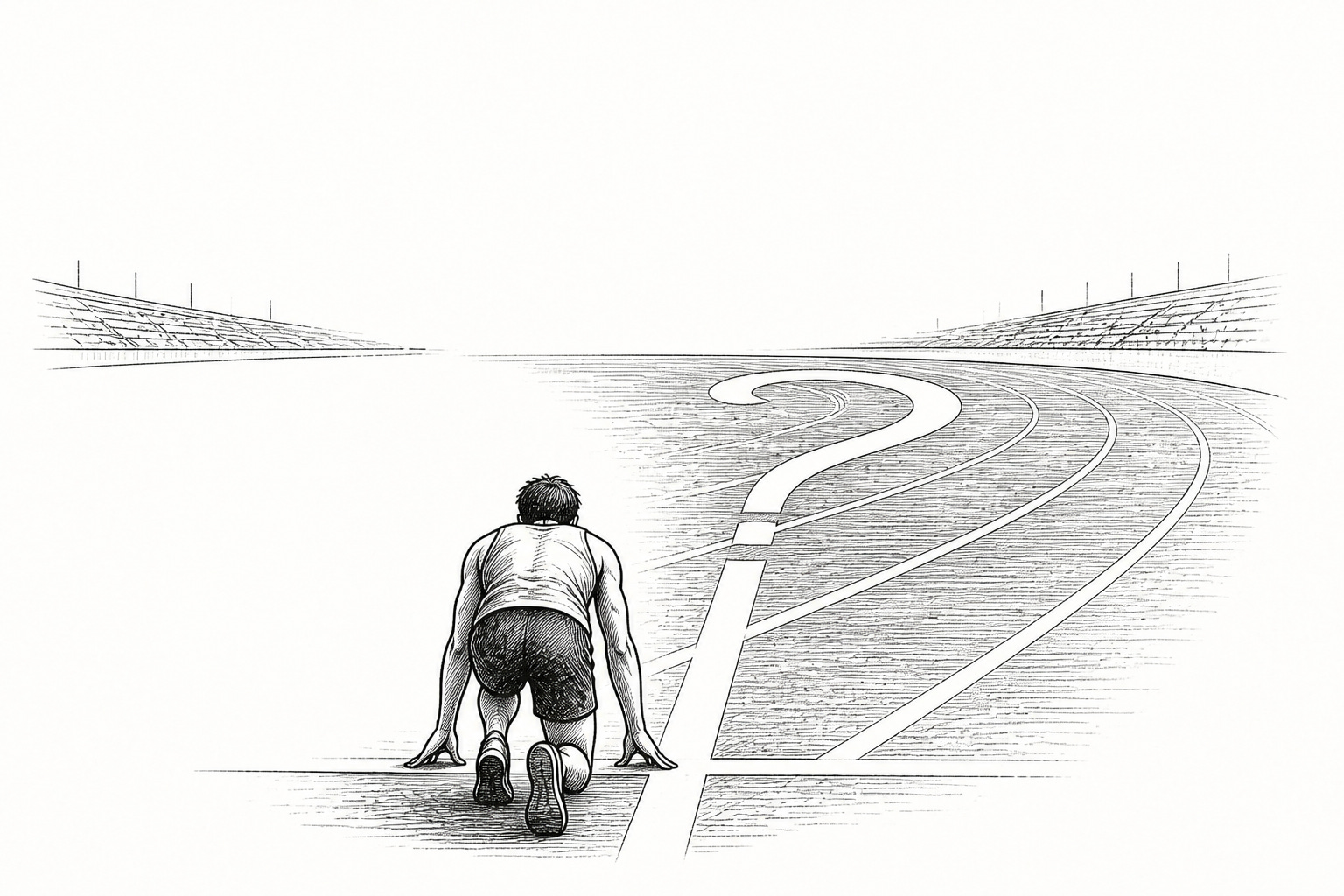
1. Are you running the race of your life?
Not someone else’s race. Yours.
The race that fits your strengths, gives you energy, and asks you to become more capable. The one that matters to you, even if other people do not understand it.
For years, my race was simple: make money.
Money is still important to me. I want the freedom to travel, never panic over a bill, tip someone 100 percent, support the people I love, and help others when they need it.
But money is a poor substitute for direction.
After leaving private equity, I ran a digital marketing business that I had built with a friend during nights and weekends. That business was always a vehicle for freedom. It gave me enough income to quit a job I disliked and create space to decide what came next.
Eventually, the business plateaued. But it had served its purpose. It helped me leave one race before I knew exactly which race I wanted to enter.
I later gave up financial stability for an opportunity to work with a mentor in an entrepreneurial environment. From the outside, taking a job for almost no money looked like a step backward. For me, it was the first time I had intentionally chosen environment and learning over the appearance of success.
That experience taught me to think bigger. It showed me that far more is possible than we assume when we combine sustained work with the right people and environment.
Today, I define success differently. Success is getting what you want out of life, and having the clarity to know what that means for you.
For me, it means becoming undeniable. I want to develop the skills, relationships, and judgment to create freedom, produce meaningful work, help other people, and eventually build an extraordinary family.
Your definition should probably be different.
If you cannot name your race, you may be running one that someone else chose for you.
2. Are you even in the stadium?
Before you can run intentionally, you have to decide that your life deserves your attention.
It is easy to spend years reacting. You wake up, answer messages, complete the next assignment, meet someone else’s deadline, and unwind however you can. You remain busy enough that you never have to ask whether your activity is adding up to anything.
That was how I lived for a long time. I was grinding, then recovering from the grind.
Entering the stadium means stepping outside that cycle long enough to ask what all the effort is for.
It does not require quitting your job or starting a company. It means treating your choices as choices. It means examining how you spend your time, what you are learning, and who you are becoming.
You will not always have certainty. I certainly did not. Sometimes the honest next move is simply creating enough space to hear yourself think.
3. Who are you giving tickets to?
Look at the people in the stands.
Some genuinely want you to win. Some challenge you because they see more in you. Some only like the version of you who never changes.
You decide who gets access to your time, attention, and energy.
I have ended relationships, reduced the time I spend with certain people, and become more intentional about the people around me. Not because those people were bad, or because I had somehow become better than them. I simply began noticing how I felt after spending time in certain environments.
Some familiar hangouts started leaving me bored or empty. We were doing the same things, having the same conversations, and learning nothing new. My ambitions had changed, but my habits had not caught up.
Outgrowing a dynamic does not require condemning the people in it. It requires being honest about whether staying the same is costing you the person you are trying to become.
Pay attention to who expands your sense of possibility. Pay attention to who tells you the truth. Pay attention to who leaves you energized, curious, and more willing to do difficult things.
You are handing out the tickets, whether you realize it or not.
4. How are you training?
Once you know your race, your work should prepare you for it.
That means choosing your environment intentionally. The people beside you become your pacesetters. Their standards influence your standards. Their assumptions about what is possible eventually become yours.
It also means choosing your coaches. They might be mentors, books, colleagues, or operators further along the path. Most people inherit their teachers accidentally. You can choose yours.
Then come the reps.
Are you doing work that develops the skills your future requires, or work that merely keeps you occupied?
Right now, my training means learning constantly, improving my judgment, building relationships, taking on meaningful responsibility, and getting better with AI. I am fortunate to work with people I respect and admire. They challenge me daily, give me opportunities to have an impact, and expose the gaps in what I know.
That does not make every day easy. A good environment is not always a comfortable one. Often, the value is that it refuses to let you remain who you were.
5. Are you taking care of the runner?
Ambition can help you build a remarkable life. It can also become a convenient excuse to neglect one.
I learned that painfully.
I lost a relationship with someone I loved because I did not know who I was, much less how to care for what she needed. I was so focused on building a life that I neglected the person living it.
Taking care of the runner means caring for the body carrying your ambitions: sleep, food, movement, and rest.
It means creating enough quiet to hear your own thoughts.
It means showing up for the people you love when there is nothing to win, prove, or accomplish.
The race does not matter if the runner breaks down. Winning means very little if no one you love is waiting at the finish.
These five questions will not give you a permanent answer. Your race has to be discovered, then continually redefined.
I still lose perspective. I still confuse doing more with moving forward. I still drift and have to find my way back.
That is the hopeful part: you can come back.
You can reconsider the race. You can change how you train. You can invite different people into the stands. You can take better care of the runner.
A life you did not choose still requires effort. You might as well spend that effort building one you want.
The goal is not to run perfectly.
It is to notice when you are running in the wrong direction, listen closely enough to understand why, and have the courage to turn around.
It’s never going to be easy, but it will always be worth it.